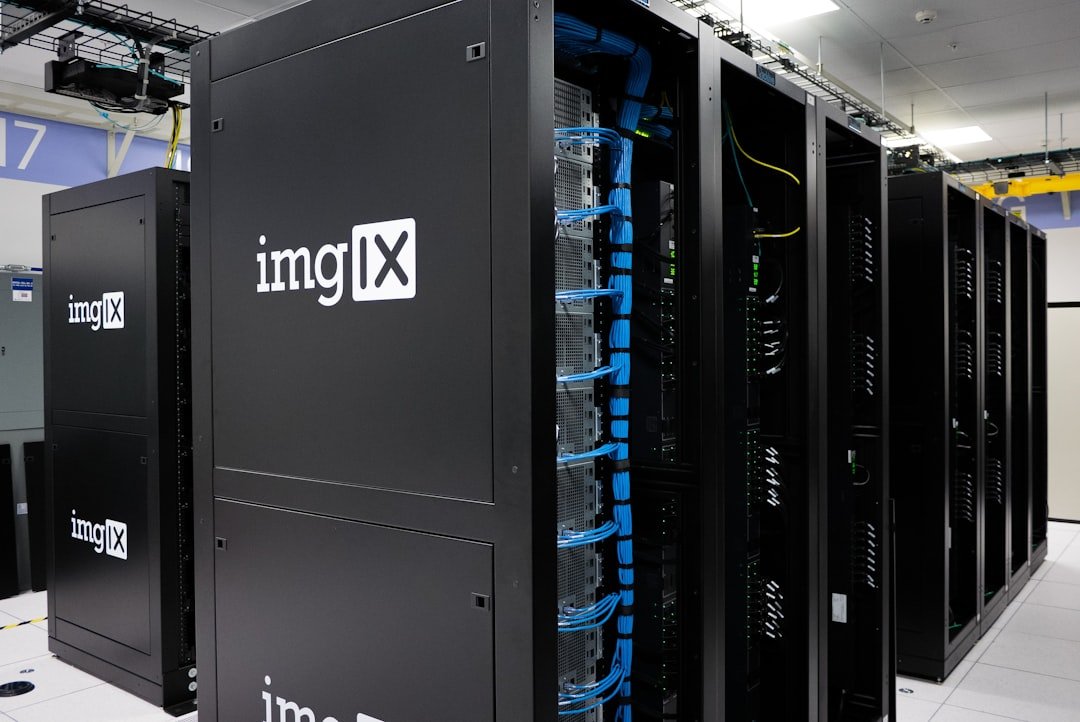
The Chiller Sequencing Crisis: Why ASEAN Buildings Are Wasting Millions on Cooling That Should Cost Less
Across ASEAN’s commercial, hospitality, healthcare, and logistics portfolios, parallel chiller systems—multiple refrigeration units running together to meet cooling load—are the single largest energy consumer on the ledger. Global data shows chillers consume 25–40% of total building energy spend. Yet facility teams across the region continue to operate these systems with manual, rule-of-thumb sequencing logic that was effective twenty years ago, leaving 7–35% in annual energy savings on the table.
The penalty is compounding. Malaysia’s TNB commercial tariffs for 2026 carry demand charges stacked on consumption, with ICPT solar pass-through adding volatility. Singapore’s business electricity rates now exceed USD 0.105/kWh. In this environment, a mid-size commercial tower running a 500-ton parallel chiller plant at baseline efficiency is burning cash. A shift to optimized chiller sequencing—staging units based on real-time load prediction rather than static setpoints—can recover 13–35% of cooling energy.
Why Parallel Chillers Fail at Efficiency
Parallel chiller plants were engineered for reliability and redundancy: if one unit trips, others remain online. That guarantee came with a cost—equipment sized to handle peak load with margin, and control logic that defaults to “run all chillers” rather than “run only what the load requires today.” Facility teams lack granular metering and predictive load modeling, so they cannot sequence units optimally across load curves. On a Monday at 6 AM, when the building is 40% occupied and cooling demand is low, a facility manager often sees four 500-ton chillers all spinning—sometimes with modulation setpoints inefficiently high. By afternoon, when tenant occupancy peaks and solar gains spike, the same four units may now be running at part-load efficiency while the compressors hunt for balance.
Manual adjustment is reactive, lagging demand by hours. Automation studies show that traditional building management system (BMS) controls achieve 16–18% savings compared to manual operation. Predictive model-based sequencing doubles that: a commercial chiller plant optimization study in tropical weather conditions found that algorithm-driven sequencing delivered a 13.8% energy saving compared to actual metered consumption—on the same hardware, no capital retrofit required.
The ROI Mechanism: Sequencing as a Retrofit Without Retrofit
A case study from the U.S. General Services Administration (GSA) on federal courthouse chiller plant optimization documented 35% energy savings at electricity rates of USD 0.11/kWh, with a five-year payback. Extrapolated to a 600-ton parallel plant in Singapore or Kuala Lumpur at current tariffs (USD 0.105/kWh or RM 0.47/kWh equivalent), a 15% to 25% energy reduction on that system alone translates to USD 25,000–USD 75,000 in annual savings depending on operating hours and baseline efficiency.
More importantly, chiller optimization requires no boiler room rewiring, no compressor replacement, and no tenant disruption. It is a software and controls retrofit: real-time load sensing, predictive building model integration, and sequencing logic that stages chillers on and off (or in and out of primary/secondary configuration) based on instantaneous thermal demand. Implementation timelines: 3–6 months. Payback: 18–36 months at ASEAN tariff levels.
Where ASEAN Facility Teams Are Exposed
Logistics and industrial refrigeration hubs—warehouses, cold storage, process cooling—are most exposed. These facilities run chillers 16–24 hours daily, meaning chiller energy is a higher proportion of total spend than in office buildings. Healthcare facilities, hospitals, and laboratory buildings also run continuous cooling. Data centres are harder targets: they typically hire specialist cooling operators and have already invested in optimization. The real gap is in commercial real estate portfolios managed by in-house teams without dedicated cooling engineers.
For REIT-backed commercial portfolios in Malaysia, Indonesia, and Thailand, chiller optimization sits at the intersection of ESG reporting (Scope 1 & 2 emissions reduction), operational cost control (a line item increasingly visible to investors and lenders), and resilience (as tariffs remain volatile, energy efficiency becomes a hedge against further rate shock). A 20% chiller energy reduction across a 15-building portfolio can move the needle on portfolio-level energy intensity metrics that lenders and debt markets scrutinize.
The Implementation Path
Facility teams should begin with a chiller plant energy audit: granular metering of each chiller unit, condenser water loop temperature tracking, and identification of the actual load profile across typical weekday, weekend, and seasonal patterns. Most ASEAN buildings lack this data. Once baselined, optimization can proceed in two stages: first, tuning existing BMS logic to stage chillers based on ambient temperature and occupancy (low-cost, 5–8% savings); second, deploying a model predictive control overlay that forecasts load 4–8 hours ahead and pre-stages units accordingly (13–18% additional savings, moderate capex for instrumentation and control algorithms).
Smaller portfolios can pilot on a single major facility, validate the ROI, then roll out across buildings. Larger portfolios often benefit from a centralized energy operations center that monitors and optimizes chiller fleets across multiple sites.
With ASEAN electricity tariffs solidifying at elevated levels and tariff volatility expected to persist, chiller system optimization is no longer a discretionary efficiency play—it is a portfolio economics necessity. The question for facility teams is not whether to optimize, but how quickly to capture the 7–35% in available savings before competing buildings do.
Interested in exploring chiller optimization for your portfolio? Reach out to discuss your facility’s cooling strategy.
Interested in Japanese Deep-Tech for Your ASEAN Operations?
Technicity bridges Japanese bio-process innovation into ASEAN markets. Tell us about your needs and we will connect you with the right technology.