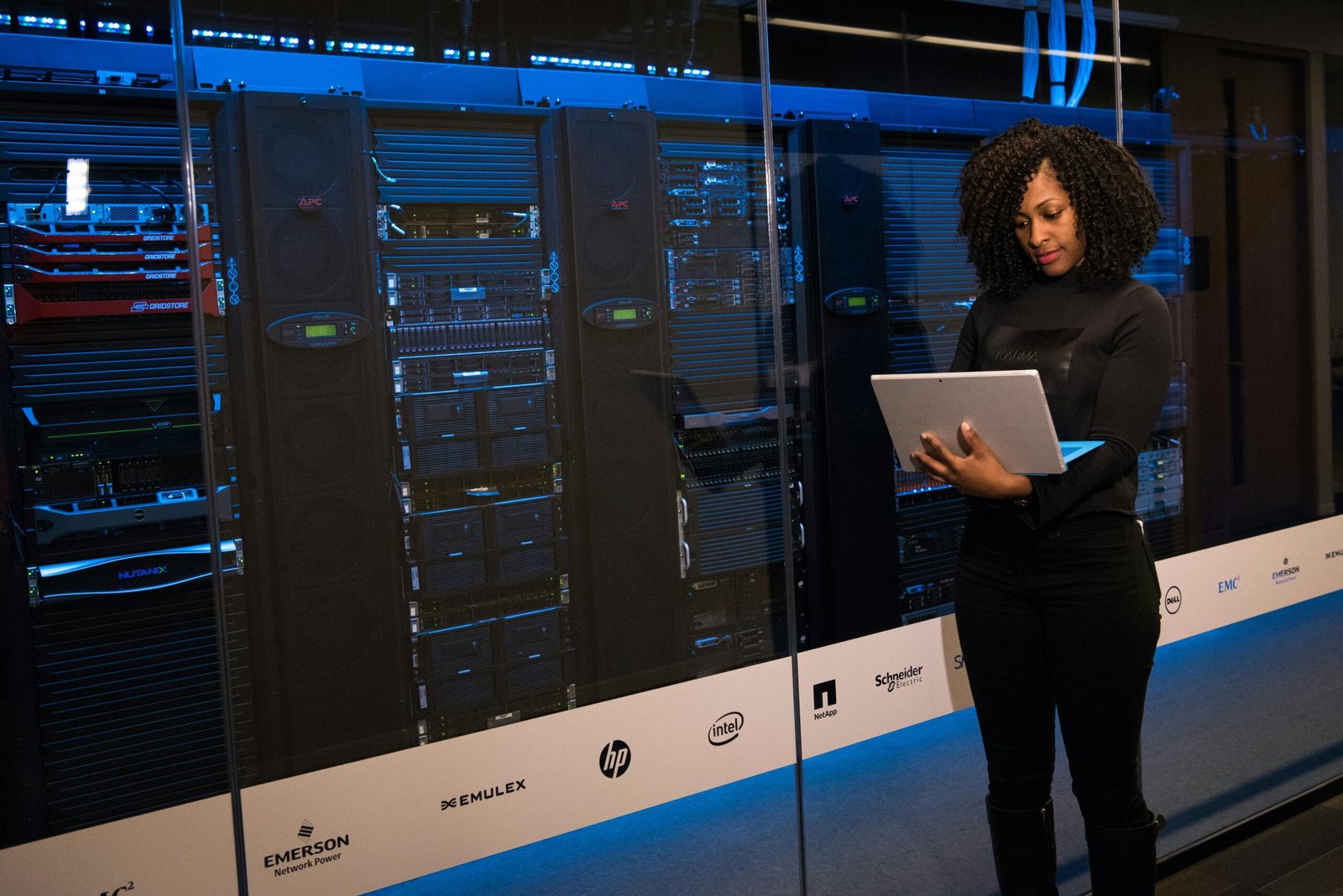
In October 2024, Microsoft signed a RM10.5 billion (approximately USD 2.2 billion) commitment to Malaysian cloud and data centre infrastructure — the largest single technology investment in the country’s history. Google followed with a USD 2 billion data centre announcement for Johor. By the time this cycle of hyperscaler capex closes, Peninsular Malaysia will be running somewhere between 800 megawatts and 1.2 gigawatts of data centre capacity. Every rack in every one of those facilities has the same engineering problem: heat. And the patents for solving it are sitting, largely unlicensed, in Japanese corporate IP portfolios.
The Density Problem That Air Cooling Cannot Fix
Legacy data centres — the kind built across Southeast Asia through the 2000s and 2010s — ran server racks at 5 to 10 kilowatts of thermal load per rack. Air cooling handles this comfortably. The facilities now being planned for AI inference workloads, GPU clusters, and high-performance computing in Malaysia and Singapore are a different category entirely. Rack densities of 40 to 100 kW are standard specifications for modern AI data centres, and some GPU-dense configurations exceed 120 kW per rack.
Air cooling becomes physically and economically untenable above roughly 25 kW per rack. The solution stack — liquid cooling, two-phase immersion, vapor chambers, and heat pipe architectures — is well understood in engineering terms. What the ASEAN procurement market has not fully absorbed is where the core intellectual property for these thermal management technologies was developed, and who still holds it.
The answer is Japan. Specifically, a cluster of materials and precision engineering companies based in Tokyo and Nagano that have been filing thermal management patents since the early 1990s, primarily for aerospace, high-power electronics, and the Japanese semiconductor equipment sector. Their IP is now directly applicable to the data centre infrastructure wave sweeping Johor and the Klang Valley — and almost none of it is licensed in ASEAN.
Who Holds Japan’s Thermal IP Stack
Four Japanese companies account for the majority of commercially relevant thermal management IP in the data centre context:
Fujikura (Tokyo) has filed over 300 patent families in heat pipe manufacturing, sintered copper wick structures, and variable conductance heat pipes. Their patent JP7124264B2 and its PCT equivalents cover the sintered copper wick geometry that achieves sub-1°C/W thermal resistance at the chip-package interface — the specification that matters for GPU-dense rack configurations. Fujikura’s heat pipes are already inside a significant share of Japanese consumer electronics and server products; the ASEAN data centre market is a logical extension that simply has not happened through active licensing.
Shinko Electric Industries, a Fujitsu subsidiary based in Nagano, holds key patents on embedded heat pipe interposers for semiconductor packaging. As server modules move toward more integrated thermal-electrical co-design, Shinko’s embedded heat pipe IP becomes structural — it determines the physical architecture of the high-density modules that AI workloads demand.
Sumitomo Electric has developed and patented diamond composite thermal spreaders and metal matrix composites (MMCs) under the WO2022059623 family and related filings. Their diamond-Cu substrate achieves thermal conductivity exceeding 600 W/mK — significantly beyond what copper (400 W/mK) or conventional aluminium composites can deliver. These materials are currently supplied to the Japanese defence and power electronics sectors; commercial data centre applications remain largely untapped in ASEAN.
Nidec, following a series of acquisitions of thermal cooling specialists, holds patents spanning immersion cooling pump architectures and two-phase thermosiphon systems. Nidec has been more aggressive than the others in pursuing ASEAN partnerships, but engagement has been concentrated in automotive rather than infrastructure markets.
Why ASEAN Buyers Are Paying a Hidden Royalty Premium
The dominant procurement pattern for thermal management hardware in ASEAN data centres runs through Taiwanese ODM channels: Delta Electronics, AVC, and several Cooler Master OEM lines. These are competent, well-supported products. But they occupy a technology position downstream of the Japanese originator IP — Taiwanese manufacturers either license from the Japanese patent holders or develop workaround geometries that achieve lower performance specifications.
The practical consequence for ASEAN data centre operators is a two-tier problem. First, a licensing premium is already embedded in Taiwanese component pricing — it simply does not appear as a visible line item. ASEAN buyers are paying for Japanese IP without knowing it and without any relationship with the IP holder. Second, and strategically more significant, the Taiwanese product generation currently available in ASEAN lags Fujikura’s current vapor chamber specifications by roughly two to three years. Fujikura’s present-generation units support passive phase-change operation at rack densities up to 80 kW. Most Taiwanese OEM products will not reach that specification until 2026 or 2027 at the earliest.
For a market being built now, to serve AI workloads that will scale through the end of the decade, specifying against last-generation thermal performance is a cost that compounds over the facility’s 15- to 20-year operating life.
Licensing Pathways That Exist But Are Not Being Used
Japanese thermal IP enters ASEAN markets through two legitimate channels, both substantially underutilised relative to the available opportunity.
The first is direct component supply. Fujikura’s heat pipes and Sumitomo’s MMC substrates are available for OEM purchase, but Japanese companies calibrate their sales infrastructure for Japanese industrial customers. ASEAN-facing sales engineering is minimal. Minimum order quantities, lead times, and technical documentation are structured around engagements with Japanese system integrators, not with Malaysian data centre developers operating on hyperscaler procurement timelines. The gap is not technical — it is commercial infrastructure.
The second pathway is technology licensing for local manufacturing. Malaysia’s National Investment Aspirations framework and MIDA’s high-technology manufacturing incentive structure — which prioritises exactly the kind of advanced materials and thermal management manufacturing that Japanese IP enables — create a viable policy environment for a structured licensing arrangement. A Japanese IP holder licensing to a Malaysian manufacturer to supply the Johor data centre corridor is a deal that fits every policy priority on both sides. It has not happened at scale because no ASEAN-resident intermediary is holding both ends of the conversation simultaneously.
The 18-Month Window Before Supply Chains Lock
Hyperscaler procurement cycles for data centre infrastructure components run in three- to five-year blocks. Once Microsoft’s or Google’s Johor facilities commit to a thermal management supplier, that relationship is sticky — switching costs in operating infrastructure are high, and the vendor qualification process is expensive. The supply chain decisions being made in 2025 and 2026 will set the thermal management layer for ASEAN’s AI infrastructure through the early 2030s.
For ASEAN business developers and tech procurement leads, the actionable window is specific. Identify which Japanese thermal IP holders have signalled openness to ASEAN licensing or joint venture structures — Fujikura and Nidec have both made public statements consistent with ASEAN manufacturing interest — and map their patent families against Malaysian and Thai industrial estates with existing electronics manufacturing capacity and MIDA incentive eligibility. The intermediary position, sitting between a Japanese IP holder and an ASEAN industrial developer serving hyperscaler infrastructure procurement, is currently vacant. It will not remain so for long.
Interested in Japanese Deep-Tech for Your ASEAN Operations?
Technicity bridges Japanese bio-process innovation into ASEAN markets. Tell us about your needs and we will connect you with the right technology.