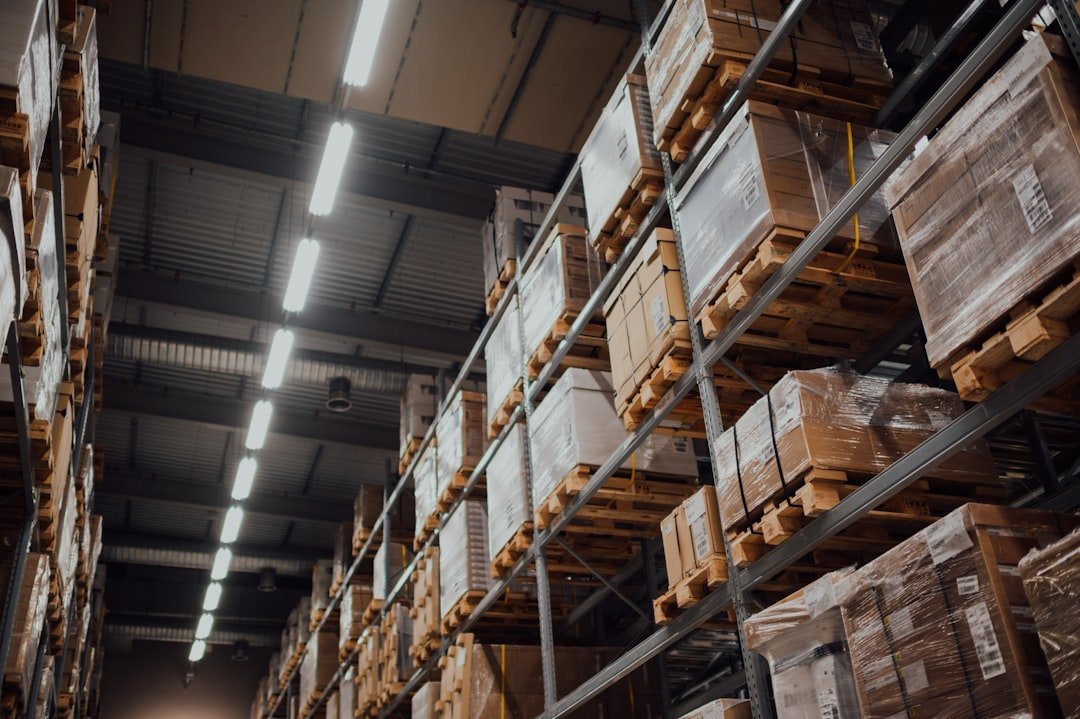
The Dock Drain: Why ASEAN’s Refrigerated Warehouses Are Hemorrhaging Cold Energy
Across ASEAN’s sprawling cold chain logistics network—valued at USD 19.76 billion in 2026—refrigeration consumes 50–70% of facility operating power. Yet the largest thermal drain in most warehouses happens not in the compressor room, but at the loading dock. Every truck arrival tears open the thermal envelope. The insulation gap between dock and truck bed is left unsealed or fitted with failing air curtains. The result: refrigerated facilities across Kuala Lumpur, Jakarta, Bangkok, and Singapore are hemorrhaging millions in wasted cold energy, compounded by tropical humidity that degrades insulation performance.
The Envelope Failure at the Dock
A refrigerated warehouse’s thermal integrity depends entirely on its building envelope. Continuous insulation (polyurethane foam at R-6.25 per inch, or polystyrene panels) wraps the perimeter and roof. But the dock door breaks that seal. Each loading cycle—a truck arriving to be loaded or unloaded—forces the facility to maintain 0–4°C whilst exterior air at 28–32°C floods inward through the dock opening. Air curtains are standard, but aging equipment, maintenance gaps, and the sheer velocity of vehicle movement defeat passive air barriers.
The problem compounds in tropical climates. Warm, saturated air entering a cold space creates moisture infiltration into insulation layers. Polyurethane foam and polystyrene both resist water initially, but repeated cycles of condensation inside the envelope degrade R-value performance. A warehouse suffering a 5–10% drift in insulation efficiency across its envelope doesn’t simply spend 5–10% more on refrigeration—it enters a cascade: higher compressor load, higher condensation risk on coils, higher maintenance cost.
Thai Logistics: The Solar Offset Model
Thai operators are recognising this drain. Companies including SCG Logistics and JWD Group have begun retrofitting warehouses with rooftop solar, coupled with AI-driven predictive maintenance on compressors. Early results show 33% reduction in refrigeration energy cost through solar offset alone. But the real insight is mechanical: these facilities are simultaneously hardening their dock seals—installing clam shell seals, insulated dock levelers, and vestibule staging areas to reduce uncontrolled air infiltration. The combination—envelope tightening plus solar—has yielded 18% operational margin improvement year-on-year.
The Humidity Compounding in ASEAN’s Wet Season
ASEAN’s monsoon cycles create seasonal pressure peaks. Jakarta’s humidity averages 72% year-round; Bangkok’s wet season pushes 85–90%. When a cold warehouse draws warm, humid air inward and that air hits a 0–4°C coil or insulation surface, condensation is immediate. Vapor barriers and air sealing become critical—but many older cold-storage facilities across the region were built or retrofitted before moisture management inside envelopes became standard. The result is hidden rot: insulation losing effectiveness, condensation pooling in wall cavities, compressors working harder to hold setpoint.
Quantifying the Leak
A medium-sized refrigerated warehouse (5,000 m²) operating at tropical ambient loses an estimated 15–25% of refrigeration capacity to uncontrolled dock infiltration alone, according to industry design guidance. At ASEAN electricity tariffs (USD 0.08–0.14 per kWh, volatile), and assuming a 150 kW compressor running 18 hours daily, that uncontrolled loss translates to USD 65,000–120,000 annually in wasted refrigeration energy. Scale that across the region’s 500+ major cold-storage hubs, and the collective thermal drain reaches billions annually.
The Retrofit Path
Hardening a warehouse envelope is capital-intensive but measurable. Dock improvements—insulated levelers, air-curtain controls, vestibule screening—cost USD 20,000–40,000 per dock. Envelope sealing (vapor barrier repair, thermal bridging mitigation, air-seal around penetrations) runs USD 50,000–150,000 depending on facility size. But payback typically achieves 2–4 years through reduced compressor runtime and maintenance. Solar integration sweetens the case: rooftop systems (200–400 kW) cost USD 150,000–300,000 but offset refrigeration power by a third, cutting thermal envelope demand proportionally.
For ASEAN facility owners managing cold-storage portfolios—food distribution, pharmaceutical, seafood export—the envelope is no longer a passive backdrop. It is an active asset. Tropical humidity, dock cycle frequency, and tariff volatility have made thermal integrity economic.
If you’re operating or planning refrigerated facilities in the region and want to quantify your dock drain, let’s talk about what a thermal survey and envelope audit might reveal.
Interested in Japanese Deep-Tech for Your ASEAN Operations?
Technicity bridges Japanese bio-process innovation into ASEAN markets. Tell us about your needs and we will connect you with the right technology.